
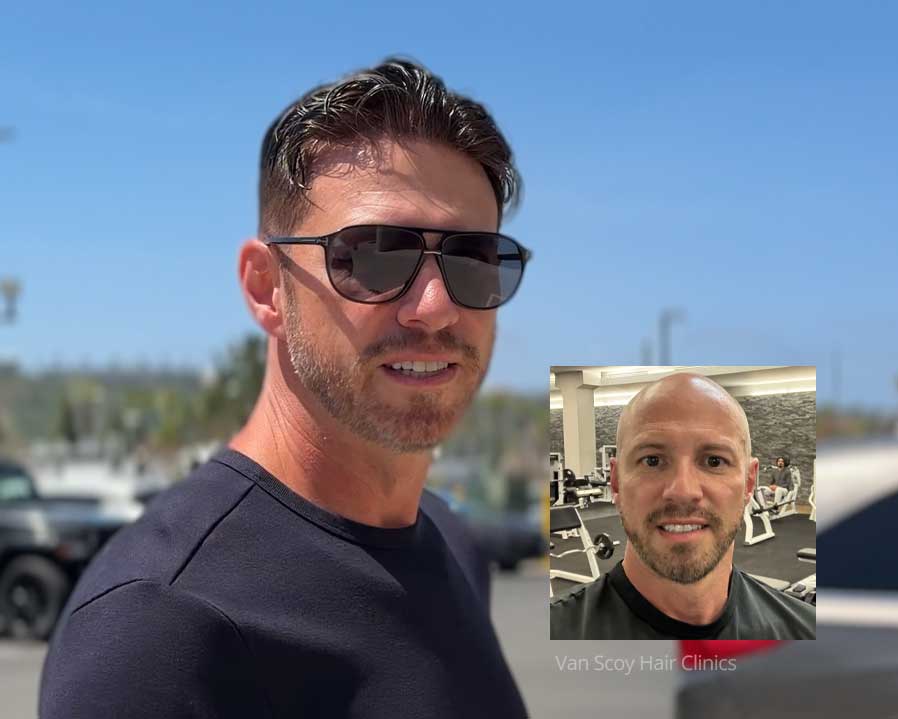
Understanding Your Hair Restoration Options
Hair restoration is not a single procedure or product. Today’s options include custom non-surgical hair replacement, hair transplant surgery, therapies intended to support existing hair — such as Platelet Rich Plasma (PRP) therapy and exosome treatment — and treatment plans that combine more than one approach.
The most appropriate solution depends on the cause and extent of your hair loss, the condition of your existing hair, donor hair availability, your lifestyle, and the results you hope to achieve. This guide explains the primary options available to men and women experiencing androgenetic alopecia (pattern hair loss), telogen effluvium, and other common forms of hair thinning, so you can have a more informed conversation with a qualified hair restoration provider.
Hair restoration is not a single procedure or product. Today’s options include custom non-surgical hair replacement, hair transplant surgery, therapies intended to support existing hair such as Platelet Rich Plasma (PRP) therapy and exosome treatment and treatment plans that combine more than one approach.
The most appropriate solution depends on the cause and extent of your hair loss, the condition of your existing hair, donor hair availability, your lifestyle, and the results you hope to achieve. This guide explains the primary options available to men and women experiencing androgenetic alopecia (pattern hair loss), telogen effluvium, and other common forms of hair thinning, so you can have a more informed conversation with a qualified hair restoration provider.
Key Takeaways
- Different hair restoration solutions address different needs.
- Non-surgical hair replacement provides immediate cosmetic coverage.
- Hair transplantation moves growing hair from a donor area to thinning or bald areas.
- Supportive therapies such as PRP and exosome treatment focus on preserving or improving existing hair rather than replacing hair that is no longer present.
- A personalized evaluation is necessary before choosing a treatment.
Begin With the Cause and Pattern of Your Hair Loss
It is important to understand why your hair is thinning before selecting a treatment. Hereditary pattern hair loss (androgenetic alopecia) is the most common cause in both men and women, but hair loss can also be associated with hormonal changes, illness, medications, stress, nutritional deficiencies, autoimmune conditions, and other factors.
A hair restoration consultation can help assess the visible pattern and extent of your hair loss. However, sudden, patchy, painful, or otherwise unexplained hair loss should also be evaluated by an appropriate healthcare professional. The American Academy of Dermatology Hair Loss Resource Center provides medically reviewed information about causes, symptoms, diagnosis, and treatment.
Factors That May Influence Your Treatment Plan
- The cause and progression of your hair loss
- The location and extent of thinning
- The health and density of your remaining hair
- The amount of suitable donor hair available
- Your age and medical history
- Your desired appearance and level of coverage
- Your preference for surgical or non-surgical care
- Your willingness to follow an ongoing maintenance plan
- Your timeline, budget, and long-term expectations
Custom Non-Surgical Hair Replacement
Custom non-surgical hair replacement restores the appearance of hair by integrating a professionally designed hair system with your existing hair. The system can be customized for color, texture, wave pattern, density, length, coverage, and hairline design.
Unlike treatments that depend on new hair growth, non-surgical hair replacement can provide an immediate cosmetic result. It may be considered by people with mild, moderate, or advanced hair loss, including individuals who are not suitable candidates for transplant surgery.
Non-Surgical Hair Replacement May Be Considered If You:
- Want immediate improvement in coverage and density
- Have limited donor hair for transplantation
- Have moderate or advanced hair loss
- Prefer to avoid surgery and surgical recovery
- Want control over your hair color, density, length, and style
- Are comfortable with professional maintenance appointments
Important Considerations
A hair replacement system requires proper home care and periodic professional maintenance. The recommended service schedule depends on the system, attachment method, natural hair growth, scalp condition, and lifestyle of the wearer.
Explore Van Scoy’s men’s non-surgical hair replacement options or learn about custom hair replacement for women.
Hair Transplant Surgery
Hair transplant surgery moves viable hair follicles from a donor area, usually at the back or sides of the scalp, to areas affected by thinning or baldness. The transplanted follicles can continue producing growing hair after the scalp has healed.
Hair transplantation may be appropriate for people who have sufficient donor hair, a suitable pattern of hair loss, realistic expectations, and no medical condition that would make the procedure inadvisable. Results develop gradually and are influenced by the number and quality of available grafts, the treatment area, hair characteristics, and continued hair loss in untreated areas.
Hair Transplantation May Be Considered If You:
- Have adequate donor hair
- Want growing hair in the treated area
- Are comfortable undergoing a surgical procedure
- Understand that growth develops gradually
- Have realistic expectations about attainable density and coverage
- Are prepared to follow all preoperative and postoperative instructions
Important Considerations
Donor hair is limited and must be managed carefully. Hair transplantation also does not prevent untreated hair from thinning in the future. A responsible surgical plan should consider your current hair loss, anticipated progression, donor supply, hairline design, and long-term treatment needs.
The International Society of Hair Restoration Surgery provides additional patient education about surgical hair restoration, candidacy, techniques, and expectations.
Learn about hair transplant procedures available through Van Scoy Hair Clinics in Ohio.
Exosome Treatment for Hair Loss
Exosomes are small extracellular particles involved in communication between cells. Exosome-based products are being studied for a range of potential regenerative applications, including their possible use in supporting hair follicle activity.
Exosome treatment does not replace missing hair in the way a custom hair system does, and it does not redistribute follicles as hair transplant surgery does. It may be discussed as an option for selected individuals who still have functioning follicles and want to explore a non-surgical therapy intended to support existing hair.
Exosome Treatment May Be Discussed If You:
- Are experiencing early or progressive thinning
- Still have existing hair in the treatment area
- Want to explore a non-surgical treatment
- Understand that individual responses can vary
- Have realistic expectations about the available evidence
- Are willing to discuss potential benefits, limitations, costs, and risks
Regulatory and Evidence Considerations
Exosome-based treatment is an evolving area of regenerative medicine. Patients should ask what product is being used, how it is administered, what evidence supports its use, what risks have been identified, and whether the product is approved by the U.S. Food and Drug Administration for the proposed purpose.
The FDA has published a consumer alert concerning regenerative medicine products, including exosome products. This information should be reviewed as part of an informed discussion with the provider offering treatment.
Read more about exosome treatment for hair loss at Van Scoy Hair Clinics.
Platelet Rich Plasma (PRP) Therapy and Other Supportive Treatments
Platelet Rich Plasma (PRP) therapy uses a concentration of a patient’s own platelets, prepared from a small blood draw, and applied to the scalp with the goal of supporting the health, appearance, or retention of existing hair. It is one of the more researched non-surgical hair therapies available today. Peer-reviewed systematic reviews of PRP in aesthetic dermatology have reported measurable increases in hair density among treated patients, though study protocols and platelet-preparation methods vary, and researchers continue to call for larger, standardized trials.
PRP and similar supportive treatments may be considered for early thinning, ongoing hair management, or use alongside another form of restoration. Supportive treatment cannot create an unlimited supply of new follicles, and results are not identical for every patient. The potential benefit depends on the cause of hair loss, follicle health, treatment protocol, and individual response.
PRP Therapy May Be Discussed If You:
- Have early to moderate thinning with existing, active follicles
- Want a non-surgical option with an established research base
- Are open to a series of treatments rather than a single session
- Want to support results from a hair transplant or hair system
- Have realistic expectations about the degree of improvement possible
Learn more about Platelet Rich Plasma (PRP) therapy for hair loss at Van Scoy Hair Clinics.
Can Hair Restoration Treatments Be Combined?
Yes. A carefully planned combination may address more than one concern, but combining treatments does not automatically produce a better result. Each component should have a clear purpose based on the individual’s diagnosis, remaining hair, goals, and treatment history.
Examples of Combination Planning May Include:
- A hair transplant to establish or improve a frontal hairline, with PRP therapy intended to help support existing hair
- Non-surgical hair replacement used when transplant surgery cannot provide the desired amount of coverage
- A custom hair system used before, between, or after surgical procedures when cosmetically appropriate
- PRP therapy considered as part of a longer-term plan for progressive thinning
A treatment plan should also account for future hair loss. Improving one area without considering likely progression elsewhere can produce an unbalanced result over time.
Comparing Hair Restoration Options
| Option | Primary Purpose | Timeline | Recovery | Ongoing Care |
|---|---|---|---|---|
| Custom non-surgical hair replacement | Provides cosmetic coverage and customized density | Immediate after fitting and styling | No surgical recovery | Home care and professional maintenance |
| Hair transplant surgery | Moves growing follicles into thinning or bald areas | Growth develops gradually over several months | Postoperative healing is required | Normal hair care after healing, with possible management of continued hair loss |
| Exosome treatment | Investigational regenerative approach intended to support existing follicles | Any response would develop gradually and can vary | Depends on the product and administration method | Follow-up recommendations vary |
| Platelet Rich Plasma (PRP) therapy | Uses concentrated platelets from the patient’s own blood to support existing hair | Results, when achieved, develop gradually over a series of sessions | Generally minimal, limited to brief post-treatment sensitivity | A series of treatments and periodic maintenance sessions are typically recommended |
This comparison provides general educational information. Candidacy, outcomes, recovery, risks, and maintenance requirements vary by individual and treatment.
How to Decide Which Option Is Right for You
A treatment should not be selected solely because it is newer, more familiar, or heavily promoted. Begin by identifying the result you want and the compromises you are prepared to accept.
Consider These Questions:
- Do I want immediate coverage or am I prepared to wait for gradual growth?
- Do I want to avoid surgery?
- Do I have enough donor hair for transplantation?
- How much density and coverage do I expect?
- Am I comfortable with routine maintenance appointments?
- How might my hair loss progress over the next several years?
- What financial commitment will be required initially and over time?
- What evidence supports the recommended treatment?
- What risks, limitations, and alternative options should I understand?
The best choice is the one that provides a realistic path toward your goals while accounting for your hair characteristics, health, lifestyle, budget, and long-term needs.
Questions to Ask a Hair Restoration Provider
The quality of the evaluation, treatment planning, technical work, and follow-up care can be as important as the treatment itself. A reputable provider should welcome detailed questions and clearly explain both the strengths and limitations of each recommendation.
- What do you believe is causing or contributing to my hair loss?
- Am I a candidate for more than one solution?
- Why are you recommending this option for me?
- What results can I realistically expect?
- What are the treatment’s limitations and potential risks?
- Who will perform each part of the procedure or service?
- What credentials and experience do the participating professionals have?
- Can I review results from clients with hair loss similar to mine?
- What recovery, home care, or professional maintenance will be required?
- What is included in the quoted cost?
- What additional expenses may arise over time?
- What happens if my hair loss continues?
You can learn more about the clinic’s history and range of services on the About Van Scoy Hair Clinics page. You may also review the men’s hair restoration results gallery, women’s hair restoration results gallery, and hair transplant photo gallery.
Frequently Asked Questions About Choosing Hair Restoration
What is the difference between hair replacement and hair restoration?
Hair restoration is a broad term that can include surgical, non-surgical, cosmetic, and supportive approaches. Custom hair replacement is a non-surgical option that restores the appearance of hair using a professionally designed hair system. Hair transplantation moves existing follicles from a donor area to another part of the scalp.
Is non-surgical hair replacement only for advanced hair loss?
No. It can be customized for different levels and patterns of hair loss. It is often selected by people who want immediate, predictable coverage, including those who prefer not to undergo surgery or do not have sufficient donor hair for transplantation.
How do I know whether I am a candidate for a hair transplant?
Candidacy depends on donor hair availability, the pattern and stability of your hair loss, scalp health, medical history, age, expectations, and the amount of coverage you want. These factors should be evaluated before a surgical recommendation is made.
Can women have hair transplant surgery?
Some women are appropriate candidates, particularly when they have a suitable pattern of hair loss and adequate donor density. Diffuse thinning can make transplantation less suitable in some cases, so an individualized evaluation is important.
Can exosome treatment restore hair in a completely bald area?
Exosome treatment is discussed as a therapy intended to support existing follicle activity. It should not be presented as a substitute for replacing absent hair or transplanting follicles into a bald area. Suitability and expected outcomes depend on the condition of the remaining follicles and the evidence supporting the product and protocol being offered.
How is PRP therapy different from exosome treatment?
Both are non-surgical therapies intended to support existing hair rather than replace hair that is no longer present, but they are not the same treatment. PRP therapy uses a concentration of the patient’s own platelets, prepared from their own blood, and has a larger body of published clinical research behind it. Exosome treatment uses cell-derived particles and is a newer, still-evolving area of regenerative medicine with less established regulatory and clinical guidance. A provider can explain which, if either, is appropriate for your hair and goals.
Can I use non-surgical hair replacement before or after a transplant?
Possibly. Some individuals use a custom hair system while planning surgery, waiting for transplanted hair to grow, or addressing areas that cannot receive sufficient transplant coverage. Timing and attachment methods should be coordinated with the professionals providing both services.
Which hair restoration option lasts the longest?
Longevity is measured differently for each approach. Transplanted follicles may continue growing after a successful procedure, but untreated hair can continue to thin. Hair systems require replacement and maintenance. PRP therapy and other supportive treatments may require a series of sessions and ongoing follow-up. Long-term value should be evaluated by considering results, maintenance, future hair loss, and total cost.
What should I expect during a hair restoration consultation?
A thorough consultation should include a discussion of your hair loss history, goals, medical considerations, existing hair, donor area when relevant, treatment preferences, expected results, limitations, maintenance requirements, and costs. You should have enough information to compare appropriate options without pressure to make an immediate decision.
Choosing a Solution Based on Your Individual Needs
There is no single hair restoration treatment that is right for every person. Custom non-surgical hair replacement, hair transplant surgery, exosome treatment, PRP therapy, and combination plans serve different purposes and involve different expectations.
A private consultation provides the opportunity to evaluate your hair, discuss your goals, compare appropriate options, and receive recommendations based on your individual circumstances.
Schedule a free private consultation with Van Scoy Hair Clinics in Cleveland, Ashland, or Columbus, Ohio.
Medical information notice: This page is provided for general educational purposes and is not a substitute for diagnosis or treatment by a qualified healthcare professional. Hair restoration results, candidacy, risks, recovery, and maintenance requirements vary. Seek medical evaluation for sudden, patchy, painful, inflamed, or otherwise unexplained hair loss.
Content review recommendation: Before publication, the sections addressing surgical procedures, PRP therapy, and exosome treatment should be reviewed and approved by the appropriately qualified Van Scoy medical professional. Add the reviewer’s name, credentials, review date, and a link to a substantive professional biography in the byline block at the top of this page.
” columns=”” column_min_width=”” column_spacing=”” rule_style=”” rule_size=”” rule_color=”” hue=”” saturation=”” lightness=”” alpha=”” user_select=”” content_alignment_medium=”” content_alignment_small=”” content_alignment=”” disable_idd=”no” hide_on_mobile=”small-visibility,medium-visibility,large-visibility” sticky_display=”normal,sticky” class=”” id=”” html_attributes=”W10=” width_medium=”” width_small=”” width=”” min_width_medium=”” min_width_small=”” min_width=”” max_width_medium=”” max_width_small=”” max_width=”” margin_top_medium=”” margin_right_medium=”” margin_bottom_medium=”” margin_left_medium=”” margin_top_small=”” margin_right_small=”” margin_bottom_small=”” margin_left_small=”” margin_top=”” margin_right=”” margin_bottom=”” margin_left=”” fusion_font_family_text_font=”” fusion_font_variant_text_font=”” font_size=”” line_height=”” letter_spacing=”” text_transform=”” text_color=”” render_logics=”” logics=”” animation_type=”” animation_direction=”left” animation_color=”” animation_speed=”0.3″ animation_delay=”0″ animation_offset=””]
Understanding Your Hair Restoration Options
Hair restoration is not a single procedure or product. Today’s options include custom non-surgical hair replacement, hair transplant surgery, therapies intended to support existing hair — such as Platelet Rich Plasma (PRP) therapy and exosome treatment — and treatment plans that combine more than one approach.
The most appropriate solution depends on the cause and extent of your hair loss, the condition of your existing hair, donor hair availability, your lifestyle, and the results you hope to achieve. This guide explains the primary options available to men and women experiencing androgenetic alopecia (pattern hair loss), telogen effluvium, and other common forms of hair thinning, so you can have a more informed conversation with a qualified hair restoration provider.
Key Takeaways
- Different hair restoration solutions address different needs.
- Non-surgical hair replacement provides immediate cosmetic coverage.
- Hair transplantation moves growing hair from a donor area to thinning or bald areas.
- Supportive therapies such as PRP and exosome treatment focus on preserving or improving existing hair rather than replacing hair that is no longer present.
- A personalized evaluation is necessary before choosing a treatment.
Begin With the Cause and Pattern of Your Hair Loss
It is important to understand why your hair is thinning before selecting a treatment. Hereditary pattern hair loss (androgenetic alopecia) is the most common cause in both men and women, but hair loss can also be associated with hormonal changes, illness, medications, stress, nutritional deficiencies, autoimmune conditions, and other factors.
A hair restoration consultation can help assess the visible pattern and extent of your hair loss. However, sudden, patchy, painful, or otherwise unexplained hair loss should also be evaluated by an appropriate healthcare professional. The American Academy of Dermatology Hair Loss Resource Center provides medically reviewed information about causes, symptoms, diagnosis, and treatment.
Factors That May Influence Your Treatment Plan
- The cause and progression of your hair loss
- The location and extent of thinning
- The health and density of your remaining hair
- The amount of suitable donor hair available
- Your age and medical history
- Your desired appearance and level of coverage
- Your preference for surgical or non-surgical care
- Your willingness to follow an ongoing maintenance plan
- Your timeline, budget, and long-term expectations
Custom Non-Surgical Hair Replacement
Custom non-surgical hair replacement restores the appearance of hair by integrating a professionally designed hair system with your existing hair. The system can be customized for color, texture, wave pattern, density, length, coverage, and hairline design.
Unlike treatments that depend on new hair growth, non-surgical hair replacement can provide an immediate cosmetic result. It may be considered by people with mild, moderate, or advanced hair loss, including individuals who are not suitable candidates for transplant surgery.
Non-Surgical Hair Replacement May Be Considered If You:
- Want immediate improvement in coverage and density
- Have limited donor hair for transplantation
- Have moderate or advanced hair loss
- Prefer to avoid surgery and surgical recovery
- Want control over your hair color, density, length, and style
- Are comfortable with professional maintenance appointments
Important Considerations
A hair replacement system requires proper home care and periodic professional maintenance. The recommended service schedule depends on the system, attachment method, natural hair growth, scalp condition, and lifestyle of the wearer.
Explore Van Scoy’s men’s non-surgical hair replacement options or learn about custom hair replacement for women.
Hair Transplant Surgery
Hair transplant surgery moves viable hair follicles from a donor area, usually at the back or sides of the scalp, to areas affected by thinning or baldness. The transplanted follicles can continue producing growing hair after the scalp has healed.
Hair transplantation may be appropriate for people who have sufficient donor hair, a suitable pattern of hair loss, realistic expectations, and no medical condition that would make the procedure inadvisable. Results develop gradually and are influenced by the number and quality of available grafts, the treatment area, hair characteristics, and continued hair loss in untreated areas.
Hair Transplantation May Be Considered If You:
- Have adequate donor hair
- Want growing hair in the treated area
- Are comfortable undergoing a surgical procedure
- Understand that growth develops gradually
- Have realistic expectations about attainable density and coverage
- Are prepared to follow all preoperative and postoperative instructions
Important Considerations
Donor hair is limited and must be managed carefully. Hair transplantation also does not prevent untreated hair from thinning in the future. A responsible surgical plan should consider your current hair loss, anticipated progression, donor supply, hairline design, and long-term treatment needs.
The International Society of Hair Restoration Surgery provides additional patient education about surgical hair restoration, candidacy, techniques, and expectations.
Learn about hair transplant procedures available through Van Scoy Hair Clinics in Ohio.
Exosome Treatment for Hair Loss
Exosomes are small extracellular particles involved in communication between cells. Exosome-based products are being studied for a range of potential regenerative applications, including their possible use in supporting hair follicle activity.
Exosome treatment does not replace missing hair in the way a custom hair system does, and it does not redistribute follicles as hair transplant surgery does. It may be discussed as an option for selected individuals who still have functioning follicles and want to explore a non-surgical therapy intended to support existing hair.
Exosome Treatment May Be Discussed If You:
- Are experiencing early or progressive thinning
- Still have existing hair in the treatment area
- Want to explore a non-surgical treatment
- Understand that individual responses can vary
- Have realistic expectations about the available evidence
- Are willing to discuss potential benefits, limitations, costs, and risks
Regulatory and Evidence Considerations
Exosome-based treatment is an evolving area of regenerative medicine. Patients should ask what product is being used, how it is administered, what evidence supports its use, what risks have been identified, and whether the product is approved by the U.S. Food and Drug Administration for the proposed purpose.
The FDA has published a consumer alert concerning regenerative medicine products, including exosome products. This information should be reviewed as part of an informed discussion with the provider offering treatment.
Read more about exosome treatment for hair loss at Van Scoy Hair Clinics.
Platelet Rich Plasma (PRP) Therapy and Other Supportive Treatments
Platelet Rich Plasma (PRP) therapy uses a concentration of a patient’s own platelets, prepared from a small blood draw, and applied to the scalp with the goal of supporting the health, appearance, or retention of existing hair. It is one of the more researched non-surgical hair therapies available today. Peer-reviewed systematic reviews of PRP in aesthetic dermatology have reported measurable increases in hair density among treated patients, though study protocols and platelet-preparation methods vary, and researchers continue to call for larger, standardized trials.
PRP and similar supportive treatments may be considered for early thinning, ongoing hair management, or use alongside another form of restoration. Supportive treatment cannot create an unlimited supply of new follicles, and results are not identical for every patient. The potential benefit depends on the cause of hair loss, follicle health, treatment protocol, and individual response.
PRP Therapy May Be Discussed If You:
- Have early to moderate thinning with existing, active follicles
- Want a non-surgical option with an established research base
- Are open to a series of treatments rather than a single session
- Want to support results from a hair transplant or hair system
- Have realistic expectations about the degree of improvement possible
Learn more about Platelet Rich Plasma (PRP) therapy for hair loss at Van Scoy Hair Clinics.
Site architecture note: the URL above currently references the prior “Enhanced Hair Therapy” naming. If the underlying service page is also being renamed to PRP terminology, update the slug and set up a 301 redirect from the old URL to preserve link equity and avoid a broken internal link — see the summary notes following this document.
Can Hair Restoration Treatments Be Combined?
Yes. A carefully planned combination may address more than one concern, but combining treatments does not automatically produce a better result. Each component should have a clear purpose based on the individual’s diagnosis, remaining hair, goals, and treatment history.
Examples of Combination Planning May Include:
- A hair transplant to establish or improve a frontal hairline, with PRP therapy intended to help support existing hair
- Non-surgical hair replacement used when transplant surgery cannot provide the desired amount of coverage
- A custom hair system used before, between, or after surgical procedures when cosmetically appropriate
- PRP therapy considered as part of a longer-term plan for progressive thinning
A treatment plan should also account for future hair loss. Improving one area without considering likely progression elsewhere can produce an unbalanced result over time.
Comparing Hair Restoration Options
| Option | Primary Purpose | Timeline | Recovery | Ongoing Care |
|---|---|---|---|---|
| Custom non-surgical hair replacement | Provides cosmetic coverage and customized density | Immediate after fitting and styling | No surgical recovery | Home care and professional maintenance |
| Hair transplant surgery | Moves growing follicles into thinning or bald areas | Growth develops gradually over several months | Postoperative healing is required | Normal hair care after healing, with possible management of continued hair loss |
| Exosome treatment | Investigational regenerative approach intended to support existing follicles | Any response would develop gradually and can vary | Depends on the product and administration method | Follow-up recommendations vary |
| Platelet Rich Plasma (PRP) therapy | Uses concentrated platelets from the patient’s own blood to support existing hair | Results, when achieved, develop gradually over a series of sessions | Generally minimal, limited to brief post-treatment sensitivity | A series of treatments and periodic maintenance sessions are typically recommended |
This comparison provides general educational information. Candidacy, outcomes, recovery, risks, and maintenance requirements vary by individual and treatment.
How to Decide Which Option Is Right for You
A treatment should not be selected solely because it is newer, more familiar, or heavily promoted. Begin by identifying the result you want and the compromises you are prepared to accept.
Consider These Questions:
- Do I want immediate coverage or am I prepared to wait for gradual growth?
- Do I want to avoid surgery?
- Do I have enough donor hair for transplantation?
- How much density and coverage do I expect?
- Am I comfortable with routine maintenance appointments?
- How might my hair loss progress over the next several years?
- What financial commitment will be required initially and over time?
- What evidence supports the recommended treatment?
- What risks, limitations, and alternative options should I understand?
The best choice is the one that provides a realistic path toward your goals while accounting for your hair characteristics, health, lifestyle, budget, and long-term needs.
Questions to Ask a Hair Restoration Provider
The quality of the evaluation, treatment planning, technical work, and follow-up care can be as important as the treatment itself. A reputable provider should welcome detailed questions and clearly explain both the strengths and limitations of each recommendation.
- What do you believe is causing or contributing to my hair loss?
- Am I a candidate for more than one solution?
- Why are you recommending this option for me?
- What results can I realistically expect?
- What are the treatment’s limitations and potential risks?
- Who will perform each part of the procedure or service?
- What credentials and experience do the participating professionals have?
- Can I review results from clients with hair loss similar to mine?
- What recovery, home care, or professional maintenance will be required?
- What is included in the quoted cost?
- What additional expenses may arise over time?
- What happens if my hair loss continues?
You can learn more about the clinic’s history and range of services on the About Van Scoy Hair Clinics page. You may also review the men’s hair restoration results gallery, women’s hair restoration results gallery, and hair transplant photo gallery.
Frequently Asked Questions About Choosing Hair Restoration
What is the difference between hair replacement and hair restoration?
Hair restoration is a broad term that can include surgical, non-surgical, cosmetic, and supportive approaches. Custom hair replacement is a non-surgical option that restores the appearance of hair using a professionally designed hair system. Hair transplantation moves existing follicles from a donor area to another part of the scalp.
Is non-surgical hair replacement only for advanced hair loss?
No. It can be customized for different levels and patterns of hair loss. It is often selected by people who want immediate, predictable coverage, including those who prefer not to undergo surgery or do not have sufficient donor hair for transplantation.
How do I know whether I am a candidate for a hair transplant?
Candidacy depends on donor hair availability, the pattern and stability of your hair loss, scalp health, medical history, age, expectations, and the amount of coverage you want. These factors should be evaluated before a surgical recommendation is made.
Can women have hair transplant surgery?
Some women are appropriate candidates, particularly when they have a suitable pattern of hair loss and adequate donor density. Diffuse thinning can make transplantation less suitable in some cases, so an individualized evaluation is important.
Can exosome treatment restore hair in a completely bald area?
Exosome treatment is discussed as a therapy intended to support existing follicle activity. It should not be presented as a substitute for replacing absent hair or transplanting follicles into a bald area. Suitability and expected outcomes depend on the condition of the remaining follicles and the evidence supporting the product and protocol being offered.
How is PRP therapy different from exosome treatment?
Both are non-surgical therapies intended to support existing hair rather than replace hair that is no longer present, but they are not the same treatment. PRP therapy uses a concentration of the patient’s own platelets, prepared from their own blood, and has a larger body of published clinical research behind it. Exosome treatment uses cell-derived particles and is a newer, still-evolving area of regenerative medicine with less established regulatory and clinical guidance. A provider can explain which, if either, is appropriate for your hair and goals.
Can I use non-surgical hair replacement before or after a transplant?
Possibly. Some individuals use a custom hair system while planning surgery, waiting for transplanted hair to grow, or addressing areas that cannot receive sufficient transplant coverage. Timing and attachment methods should be coordinated with the professionals providing both services.
Which hair restoration option lasts the longest?
Longevity is measured differently for each approach. Transplanted follicles may continue growing after a successful procedure, but untreated hair can continue to thin. Hair systems require replacement and maintenance. PRP therapy and other supportive treatments may require a series of sessions and ongoing follow-up. Long-term value should be evaluated by considering results, maintenance, future hair loss, and total cost.
What should I expect during a hair restoration consultation?
A thorough consultation should include a discussion of your hair loss history, goals, medical considerations, existing hair, donor area when relevant, treatment preferences, expected results, limitations, maintenance requirements, and costs. You should have enough information to compare appropriate options without pressure to make an immediate decision.
Choosing a Solution Based on Your Individual Needs
There is no single hair restoration treatment that is right for every person. Custom non-surgical hair replacement, hair transplant surgery, exosome treatment, PRP therapy, and combination plans serve different purposes and involve different expectations.
A private consultation provides the opportunity to evaluate your hair, discuss your goals, compare appropriate options, and receive recommendations based on your individual circumstances.
Schedule a free private consultation with Van Scoy Hair Clinics in Cleveland, Ashland, or Columbus, Ohio.
Medical information notice: This page is provided for general educational purposes and is not a substitute for diagnosis or treatment by a qualified healthcare professional. Hair restoration results, candidacy, risks, recovery, and maintenance requirements vary. Seek medical evaluation for sudden, patchy, painful, inflamed, or otherwise unexplained hair loss.
Content review recommendation: Before publication, the sections addressing surgical procedures, PRP therapy, and exosome treatment should be reviewed and approved by the appropriately qualified Van Scoy medical professional. Add the reviewer’s name, credentials, review date, and a link to a substantive professional biography in the byline block at the top of this page.