
Hair Transplant Repair & Corrective Hair Restoration
Can a Failed or Unnatural-Looking Hair Transplant Be Fixed?
In most cases, yes. A disappointing hair transplant result whether it is an unnatural hairline, visible scarring, or thinning that wasn’t corrected properly is very often repairable. Corrective hair restoration uses many of the same techniques as a primary transplant, but with an added layer of diagnostic and surgical precision: identifying what went wrong the first time, working around scar tissue and limited donor supply, and rebuilding a natural-looking result.
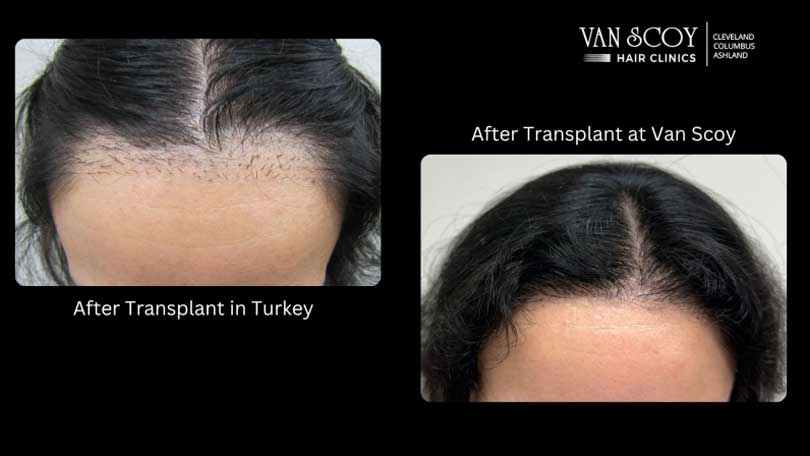
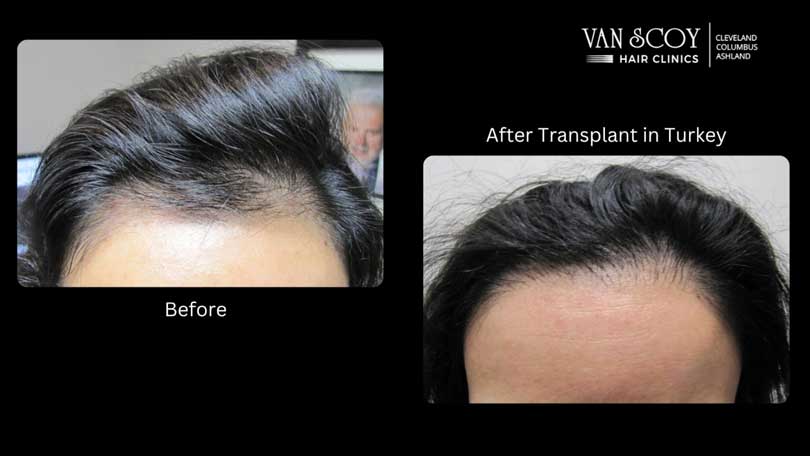
Van Scoy has provided hair restoration services for decades, and a meaningful share of that work today involves correcting the results of previous procedures including a growing number of patients returning home after low-cost transplants performed overseas.
If you are unhappy with a past transplant, you aren’t alone, and you are not without options.
Common Issues Corrective Surgery Can Resolve
Unnatural or “Pluggy” Hairlines
Older transplant techniques — and rushed, high-volume clinics — often place grafts in tight, uniform rows or at an unnatural angle, producing the tell-tale “pluggy” or doll-hair look instead of the soft, irregular pattern of natural hair growth.
Visible Donor Scarring (FUT & FUE)
A widened linear scar from strip (FUT) harvesting, or diffuse scarring from over-aggressive FUE punches, can leave the donor area visibly damaged. Repair options range from scar revision surgery to scalp micropigmentation (SMP) for camouflage.
Depleted Donor Areas & Incorrect Hair Direction
When too many grafts are removed from too small an area — common in high-volume “mega-session” clinics — the donor zone can appear patchy or moth-eaten, limiting future options. Misangled grafts can also leave hair growing in inconsistent or unnatural directions.
Hair Transplant Correction Results
These before-and-after photos show actual corrective procedures performed at Van Scoy, including patients returning from unsatisfactory results overseas. Every case is different, but each one reflects what’s possible with the right diagnosis and a carefully planned approach.