

Understanding Female Hair Loss
Hair loss in women doesn’t always look the way people expect, and it isn’t always genetic. Understanding what’s actually driving your hair loss is the first step toward choosing a solution that fits your situation.
Many women experience hereditary hair loss, known as female pattern hair loss, which typically shows up differently than it does in men as overall thinning or a widening part, rather than a receding hairline. According to MedlinePlus Genetics, this type of hair loss can also be associated with polycystic ovary syndrome (PCOS) in women. Beyond genetics, hair loss in women is frequently connected to hormonal shifts from pregnancy, childbirth, menopause, thyroid conditions, chemotherapy or other medical treatments, and significant physical or emotional stress. Because the causes vary so widely, an accurate diagnosis matters more here than almost anywhere else in hair restoration.
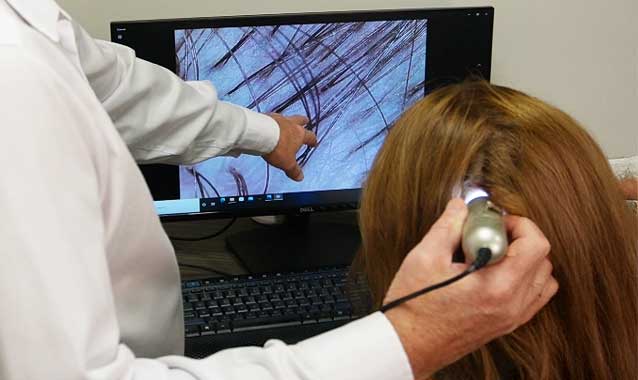
How We Evaluate Hair Loss
Every consultation at Van Scoy starts with a real, judgment-free assessment. We look at your pattern of loss, its likely cause, your hair and scalp health, and your goals, then explain which of our solutions genuinely fit and answer all your questions.
Once we understand what you are dealing with, most women fall into one (or a combination) of the following paths.


Why Women Choose Van Scoy
Van Scoy Hair Clinics has been a family-owned practice serving Ohio since 1969, and we understand that hair loss affects women differently than it does men, both physically and emotionally. Our specialists have worked with thousands of women across every cause and stage of hair loss, and we take the time to listen before recommending anything. Several well-known local personalities across Cleveland and Columbus have trusted us with their own hair restoration.

What to Expect
- Consultation. We evaluate your hair loss, discuss your goals and any underlying medical context, and recommend options that genuinely fit.
- Decision. You choose the path that makes sense for you with no pressure and no single answer pushed on every patient.
- Treatment. Whether it’s a replacement system fitting, a medical wig fitting, or the start of a regrowth protocol, we walk you through exactly what to expect.
- Ongoing care. Most solutions involve some level of follow-up or maintenance, and we stay involved to make sure results hold up over time.