
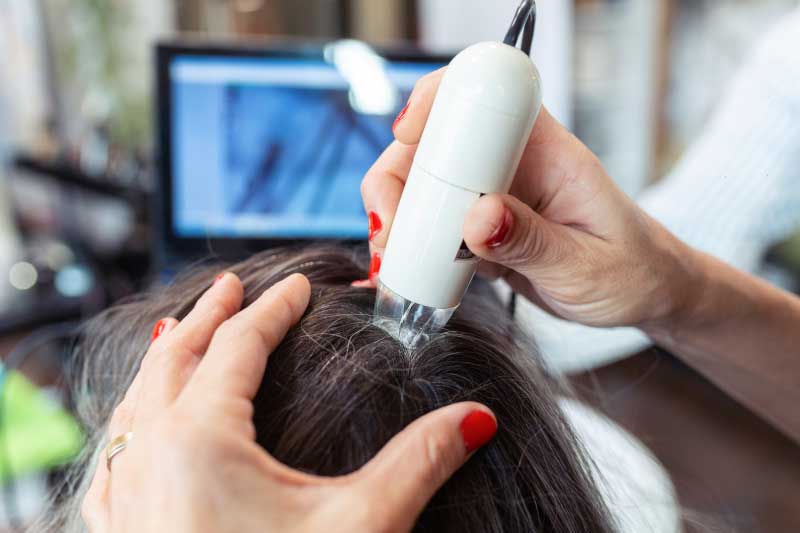
Why Is My Hair Falling Out and What Can I Do About It?
Straightforward answers to the most common questions about hair loss — from causes and treatment options to costs, finding a specialist, and what to expect.
Provided by Van Scoy Hair Clinics, serving Cleveland, Columbus, and Ashland, Ohio since 1969.
Contents
- Understanding Hair Loss — causes, genetics, stress, and when to seek help
- Understanding Your Options — surgical vs. non-surgical, combining treatments
- Men’s Hair Restoration Solutions— HairSkeen, custom systems, SMP
- Women’s Hair Restoration Solutions— wigs, medical wigs, toppers
- Hair Transplant Surgery — MUHG™, FUE, candidacy, results, and recovery
- Non-Surgical Hair Replacement— how systems work
- Treatment Center — PRP, Exosome, De|Rive, laser therapy, topicals, SMP
- Cost & Financing — pricing, insurance, and financing options
- Hair Loss in Specific Situations — chemotherapy, menopause, postpartum, teens, alopecia areata
- About Van Scoy Hair Clinics — our history, locations, and approach
Understanding Hair Loss
Why am I losing my hair?
Hair loss has many possible causes. The most common in both men and women is androgenetic alopecia, a genetic condition that causes follicles to gradually miniaturize over time until they can no longer produce visible hair. Other causes include hormonal changes, nutritional deficiencies, high stress, autoimmune conditions such as alopecia areata, and medical treatments like chemotherapy.
At Van Scoy Hair Clinics in Cleveland, Columbus, and Ashland, Ohio, a free private consultation is the most reliable way to identify your specific cause and understand your options.
Is hair loss permanent?
Whether hair loss is permanent depends entirely on the cause. Androgenetic alopecia — the genetic form — is progressive and permanent without intervention. Many other types, including stress-related shedding (telogen effluvium), postpartum hair loss, and nutritional deficiency hair loss, are temporary and resolve once the underlying trigger is addressed. Early evaluation is key: the sooner you understand what you are dealing with, the more options are available to you.
What is androgenetic alopecia?
Androgenetic alopecia — commonly called male-pattern or female-pattern hair loss — is the most common form of hair loss, affecting an estimated 50 million men and 30 million women in the United States. It is caused by genetic sensitivity to DHT (dihydrotestosterone), a hormone that gradually shrinks hair follicles and shortens the active growth cycle until follicles can no longer produce visible hair. Van Scoy Hair Clinics has treated androgenetic alopecia in men and women across Ohio since 1969.
What causes hair loss in women specifically?
Women experience hair loss for many of the same reasons as men, but hormonal factors play a proportionally larger role. Common causes include female-pattern androgenetic alopecia, thyroid dysfunction, pregnancy and postpartum hormonal shifts, menopause, polycystic ovary syndrome (PCOS), and iron deficiency anemia. Female hair loss typically presents as diffuse thinning across the crown rather than a receding hairline, which can make it harder to detect early. Van Scoy’s women’s hair loss specialists in Cleveland, Columbus, and Ashland are experienced in diagnosing and treating every form of female hair loss.
If my father was bald, does that mean I will be too?
Your father’s hair loss is a meaningful data point, but it does not determine your outcome. The genetics of hair loss are polygenic — involving multiple genes from both parents’ sides. Environmental factors, overall health, and early intervention all influence how any genetic tendency expresses itself. Many people with a strong family history of hair loss maintain good hair density well into their 50s and 60s with proactive treatment. Van Scoy’s specialists can evaluate your individual risk and discuss options to slow or stop progression.
How much hair loss is normal each day?
Losing between 50 and 100 hairs per day is considered within the normal range for adults. These are hairs completing their natural growth cycle — not signs of a problem. Shedding that consistently exceeds this amount, occurs in patches, or is accompanied by visible changes in density warrants a professional evaluation. Van Scoy Hair Clinics offers free consultations at all three Ohio locations.
Can stress cause hair loss?
Yes. Significant physical or emotional stress can trigger telogen effluvium, in which a large number of follicles simultaneously shift from the growth phase to the resting phase, causing noticeable shedding roughly 2–4 months after the triggering event. The good news is that stress-related hair loss is almost always temporary, and hair typically regrows fully once the stressor resolves and the body restabilizes. If you are concerned about stress-related shedding, a free evaluation at any Van Scoy location can confirm the cause.
For a broader overview of hair loss causes and conditions, the American Hair Loss Association is a trusted consumer resource.
Understanding Your Options
What are the main types of hair loss treatment available?
Hair loss treatments fall into several broad categories, all of which Van Scoy Hair Clinics offers at our Cleveland, Columbus, and Ashland locations: non-surgical hair replacement systems (immediate full-hair appearance, no surgery required); surgical hair transplantation (permanent follicle relocation via Multi-Unit Hair Grafting™ or FUE); medical and therapeutic treatments including PRP, Exosome treatment, low-level laser therapy, and topical treatments; scalp micropigmentation (cosmetic follicle replication); and custom wigs including medical and alopecia wigs. The right option — or combination — depends on your hair loss cause, extent, lifestyle, and goals.
What is the difference between surgical and non-surgical hair restoration?
Surgical hair restoration — primarily Multi-Unit Hair Grafting™ (MUHG) and FUE hair transplant procedures — permanently relocates living follicles from a donor area to thinning regions. Results are lasting but require cost, some recovery time, and suitable candidacy based on available donor hair. Non-surgical hair replacement creates the immediate appearance of a full head of hair using a custom hair system — no surgery, no recovery, immediate results, and suitable for any level of hair loss including complete baldness. Both approaches are available at Van Scoy’s three Ohio locations.
Can multiple hair loss treatments be combined?
Yes — combination approaches are common in our practice and often produce better outcomes than any single treatment alone. For example, laser hair therapy is frequently used alongside a non-surgical hair replacement system to maintain the health of remaining natural hair. PRP therapy is often recommended alongside hair transplant surgery to support healing and graft survival. Our specialists will recommend the most effective combination for your specific situation during your free consultation.
Which hair loss treatment is “the best”?
There is no universally best hair loss treatment. The right treatment is the one that best matches your specific situation — the cause and extent of your hair loss, your age, health, lifestyle, and what outcome you are trying to achieve all determine which options are appropriate. At Van Scoy, we pride ourselves on presenting every applicable option honestly and helping you understand what each can realistically achieve. We will never steer you toward a single solution that does not fit your needs.
Not sure which option is right for you? A Van Scoy specialist will evaluate your situation at no charge and walk you through every applicable option — no pressure, no single-solution pitches. Available in person in Cleveland, Columbus, and Ashland, or remotely.
Men’s Hair Restoration Solutions
What non-surgical hair replacement options does Van Scoy offer for men?
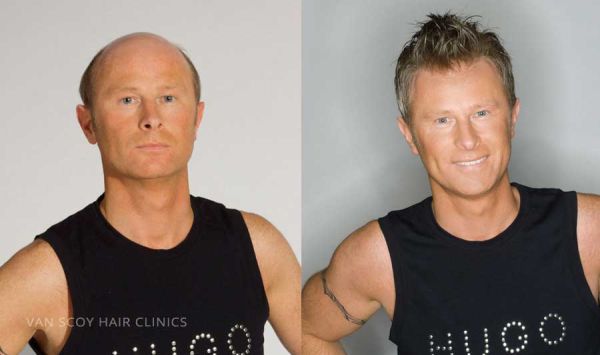
Van Scoy Hair Clinics offers premium non-surgical hair replacement systems designed specifically for men, available at our Cleveland, Columbus, and Ashland locations, including HairSkeen, a skin-based system on an ultra-thin polyurethane base that mimics the natural scalp appearance, and fully custom-built systems matched exactly to your color, texture, density, curl pattern, and lifestyle. These systems deliver immediate full-hair results and are virtually undetectable even in close social and professional contact.
What about scalp micropigmentation (SMP) for men?
Scalp micropigmentation deposits specialized pigment into the scalp to replicate the look of individual hair follicles or close-cropped stubble, creating the appearance of a full, closely shaved head. It’s a permanent, low-maintenance option that works well for any degree of hair loss, including complete baldness.
I’m in my 20s and already losing my hair. What should I do?
Starting to lose hair in your 20s is more common than most people realize — and the earlier you act, the more options you have. Early-onset androgenetic alopecia can progress more rapidly than loss beginning later in life, making early intervention especially valuable. Van Scoy Hair Clinics welcomes younger patients at all three Ohio locations and will never oversell or rush a decision.
Explore all of Van Scoy’s men’s solutions in depth.
Women’s Hair Restoration Solutions
What women’s hair loss solutions does Van Scoy offer?
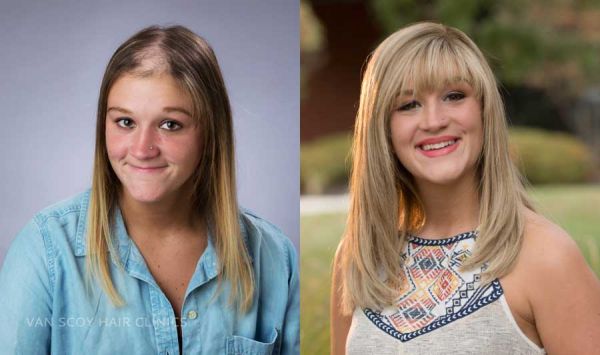
Van Scoy Hair Clinics offers a complete range of women’s hair restoration solutions at our Cleveland, Columbus, and Ashland locations, including non-surgical hair replacement, custom human hair and synthetic wigs, medical wigs and hair prosthesis for chemotherapy and medically related hair loss, hair toppers, PRP, Exosome treatment, laser hair therapy, and the De|Rive Hair Wellness System. Every solution is custom-matched to your color, texture, density, and lifestyle.
Does Van Scoy offer medical wigs for chemotherapy patients?
Yes. Van Scoy Hair Clinics has extensive experience working sensitively with oncology patients in private, unhurried settings at all three Ohio locations. See Hair Loss in Specific Situations below for a full breakdown of what to expect during and after treatment.
For hair loss related to menopause, pregnancy, or autoimmune conditions like alopecia areata, see Hair Loss in Specific Situations below — we’ve covered each of these in detail there.
Women’s hair loss is different. Your consultation should reflect that. Van Scoy’s women’s hair loss specialists in Cleveland, Columbus, and Ashland take the time to understand your full picture — medical history, lifestyle, and personal goals — before making any recommendation.
Hair Transplant Surgery
What hair transplant procedures does Van Scoy Hair Clinics offer?
Van Scoy Hair Clinics offers two permanent surgical hair restoration options: Multi-Unit Hair Grafting™ (MUHG), a registered trademark of PAI Medical Group® available at Van Scoy Hair Clinics as a licensed provider, engineered to maximize natural density from available donor hair; and FUE (Follicular Unit Extraction), which removes individual follicular units one at a time, leaving no linear scar and requiring a shorter recovery period. Both procedures are available at our Ohio locations.
Who is a good candidate for hair transplant surgery?
Men and women with hereditary hair loss, medically related hair loss, or thinning hair with sufficient donor hair supply are generally good candidates. One of the most important factors is anticipating future hair loss: a well-designed transplant must account for where hair loss is likely to progress over the years ahead, not just where it stands today. Van Scoy’s surgeons and specialists give honest, realistic candidacy assessments.
When will I begin to see hair growth after a transplant?
Generally, transplanted hair begins to grow three to five months after the procedure, with the full result typically visible at 8 to 12 months. Early shedding of transplanted hairs in the weeks following surgery is completely normal and does not indicate the procedure hasn’t worked.
Wondering if you’re a hair transplant candidate? Van Scoy’s surgeons give honest, realistic assessments — no pressure, no single-solution pitches. Free consultations available in person in Cleveland, Columbus, and Ashland, Ohio, or remotely.
Learn About Hair Transplants at Van Scoy →
Read the Full Hair Transplant FAQ →
Non-Surgical Hair Replacement
What is non-surgical hair replacement?
Non-surgical hair replacement uses a custom-designed hair system crafted to match your hair color, texture, density, curl pattern, and scalp characteristics, integrating seamlessly with any remaining natural hair. There is no surgery, no recovery period, and results are immediate. Van Scoy Hair Clinics has fitted custom hair systems for men and women in Ohio for over 50 years.
Who is a good candidate for a non-surgical hair system?
Non-surgical hair replacement is appropriate for virtually anyone experiencing hair loss — men or women, at any age, and at any level of hair loss from mild thinning to complete baldness. Because no surgery is involved and no donor hair is required, candidacy is far broader than for hair transplant surgery.
See how it works in detail.
Men’s Non-Surgical Hair Replacement →
Women’s Non-Surgical Hair Replacement →
Treatment Center
What is Platelet Rich Plasma Therapy (PRP) for hair loss?
PRP at Van Scoy Hair Clinics uses your own blood, drawn and processed to concentrate growth factors, injected into the scalp to stimulate follicle activity and encourage regrowth. It is highly effective for androgenetic alopecia and can be performed as a standalone treatment, alongside hair transplant surgery, or combined with laser hair therapy. Available at all three Ohio locations.
What is Exosome treatment for hair loss?
Exosome therapy uses exosomes — cell-signaling particles rich in growth factors and regenerative proteins — applied to the scalp to stimulate dormant follicles and promote regrowth. It’s one of the most promising newer options in hair restoration science. Ask about eligibility during your free consultation.
What is the De|Rive Hair Wellness System?
De|Rive is a comprehensive hair and scalp wellness program combining professional in-clinic treatments with a personalized at-home regimen designed to optimize scalp health, reduce shedding, and support the long-term vitality of your natural hair.
What is laser hair therapy and does it work?
Low-level laser therapy (LLLT) uses specific wavelengths of red light to stimulate cellular energy in hair follicles and improve scalp circulation. It is FDA-cleared for men and women with androgenetic alopecia, with clinical evidence supporting its effectiveness at slowing hair loss progression, particularly when used consistently.
What topical hair and scalp treatments does Van Scoy offer?
Van Scoy Hair Clinics offers a curated range of professional-grade topical treatments for the hair and scalp, frequently recommended alongside non-surgical systems, transplant surgery, or therapeutic treatments.
What is scalp micropigmentation (SMP)?
Scalp micropigmentation deposits specialized pigment into the scalp to replicate the appearance of individual hair follicles or stubble. It’s a permanent procedure requiring no ongoing maintenance beyond sun protection, available for both men and women.
Interested in our Treatment Center programs? Many of our clients combine treatments for the best long-term results. Our specialists will recommend the right combination for your specific hair loss type and goals — at no charge, and with no obligation.
Cost & Financing
How much does hair restoration cost at Van Scoy Hair Clinics?
Costs vary by treatment and individual need, and vary meaningfully from one patient to another even within the same treatment category. Non-surgical hair systems involve an initial custom system investment plus professional maintenance visits every 4–8 weeks. Hair transplant surgery is priced based on the extent of the procedure and the individual’s specific donor hair situation. The most meaningful pricing for your specific situation comes from a free private consultation. We do not believe in giving estimates without understanding what you actually need.
Does health insurance cover hair loss treatment?
Most hair loss treatments are considered elective and are not covered by standard health insurance. Exceptions may exist for medically documented conditions such as alopecia areata, chemotherapy-related hair loss, or hair loss from a diagnosed hormonal disorder. Medical wigs and hair prostheses may be partially covered as “cranial prosthetics,” particularly for cancer-related loss. Coverage varies by insurer and policy.
Does Van Scoy offer financing for hair restoration?
Yes. Van Scoy Hair Clinics offers financing options for hair transplant procedures. Ask about financing availability for other services during your consultation.
Is Van Scoy’s free consultation really free and no-obligation?
Completely. There is no cost, no pressure, and no obligation to commit to anything. Free consultations are available in person at our Cleveland (Parma), Ashland, and Columbus locations, or remotely by phone or video.
Ready to get real answers and real pricing for your situation? Every Van Scoy consultation is free, private, and completely no-obligation. Serving Cleveland, Columbus, and Ashland, Ohio since 1969.
Hair Loss in Specific Situations
What are the hair restoration options for people going through chemotherapy?
Chemotherapy-related hair loss is typically temporary. Most patients begin regrowing hair 3–6 months after completing treatment, with full density usually returning within 12–18 months. During treatment, Van Scoy Hair Clinics offers custom medical-grade wigs and hair systems that provide natural, comfortable coverage. Our specialists have experience working sensitively with oncology patients in private, unhurried settings and can coordinate with your medical team.
What hair loss options are available for women during and after menopause?
Menopause-related hair thinning is caused by declining estrogen and progesterone, which reduce the natural inhibitory effect these hormones have on DHT — the hormone responsible for androgenetic hair loss. Effective treatments available at Van Scoy for this group include non-surgical hair replacement, low-level laser therapy, PRP, Exosome treatment, and the De|Rive Hair Wellness System. A free consultation will help identify the right combination.
Is hair loss after pregnancy normal, and will it grow back?
Yes — postpartum hair shedding is extremely common and almost always temporary. During pregnancy, elevated estrogen keeps more hairs in the active growth phase than usual. After delivery, estrogen drops sharply and those hairs shift simultaneously into the shedding phase, causing noticeable increased shedding typically beginning 2–4 months postpartum. In the vast majority of cases, hair returns to pre-pregnancy density within 6–12 months without intervention.
Can teenagers experience significant hair loss, and what options are available?
Yes. Significant hair loss in teenagers can result from early-onset androgenetic alopecia, alopecia areata, iron deficiency anemia, thyroid conditions, or traction alopecia from tight hairstyles. A medical evaluation to identify the cause is the essential first step. For younger patients, non-surgical options are generally preferred because the hair loss pattern is still evolving.
What is alopecia areata and what treatment options are available?
Alopecia areata is an autoimmune condition in which the immune system attacks hair follicles, causing hair to fall out in distinct round or oval patches. It ranges from minor patchy loss to alopecia totalis (complete scalp hair loss) or alopecia universalis (complete body hair loss). At Van Scoy Hair Clinics, custom alopecia wigs provide the most immediate and versatile coverage option. Medical treatments including corticosteroids, topical immunotherapy, and newer JAK inhibitor medications may stimulate regrowth in some patients and are best coordinated with a dermatologist.
I’m losing hair but I’m not sure if it’s enough to do anything about yet. When should I come in?
The right time is now — and that is not a sales answer. Hair loss is almost always easier and less costly to address early than after significant loss has occurred. If you come in and we determine that nothing needs to be done yet, we will tell you that directly.
Your situation is specific. Your consultation should be too. Van Scoy Hair Clinics specialists take the time to understand your full picture before making any recommendations. Free consultations available in Cleveland, Columbus, and Ashland, Ohio — or remotely.
About Van Scoy Hair Clinics
Who is Van Scoy Hair Clinics?
Van Scoy Hair Clinics is a family-owned Ohio hair restoration practice founded in 1969 by Dennis and Sandra Van Scoy in Ashland, Ohio. Since then, the family has grown the practice to three locations across Ohio, with sons Scott and Todd joining the business. For over 55 years, Van Scoy has been helping men and women across Ohio restore their hair and their confidence.
What makes Van Scoy Hair Clinics different from other Ohio hair restoration providers?
Several things set Van Scoy apart. First, longevity and experience: 55+ years in business in Ohio reflects consistent results and client trust across generations. Second, full-spectrum solutions: Van Scoy offers every proven hair loss solution under one roof, so you’re never pushed toward the one thing a single-specialty clinic happens to offer. Third, honest expectation management: the Van Scoy family has always been straightforward about what results are realistic. Fourth, Multi-Unit Hair Grafting™: Van Scoy is a licensed provider of this PAI Medical Group® technique, a differentiated approach to surgical hair restoration not available at most clinics.
Where are Van Scoy Hair Clinics located in Ohio?
Van Scoy Hair Clinics operates three full-service locations across Ohio, including
- Cleveland (Parma), Ohio: (216) 739-2290
- Ashland, Ohio 44805: (419) 289-6665
- Columbus, Ohio 43235: (614) 885-6090
We are Ohio’s most trusted hair restoration specialists since 1969. Free private consultations available in person at all three Ohio locations or remotely. No cost, no pressure, no obligation.